Investment principles
How? Investing in a small number of outstanding global companies, monopolies and oligopolies with high returns on capital operating in industries with structural and predictable growth.

What does Nartex do?
Invest in the 20-25 highest quality global businesses at a reasonable price

Tomás Maraver

What is quality?
Businesses that meet three criteria:
- Sustainable cash generation;
- Ability to reinvest capital at high returns; and
- Long term runway for continued growth
Nartex invests in the best companies, facing long term favourable prospects and operating in attractive industries
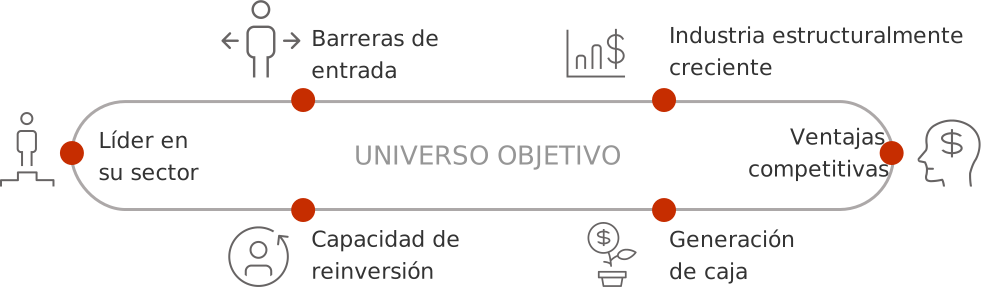
These companies usually:
Have attractive market structures
- Natural monopolies and oligopolies
- Market leaders and market share winners
- They do not compete on price, but rather brand, product quality, R&D
- They provide benefits to both the consumer and the whole value chain
- Sell non-discretionary or small ticket products
They are irreplaceable and enduring
- High barriers to entry with unique IP – trademarks, licenses, patents, high switching or replacement costs
- Competitive advantages – benefits of scale, long lasting network effects
- Extremely hard to disintermediate or be disrupted
High growth industries
- They benefit from structural trends (e.g. population aging, digitization, outsourcing, passenger growth, etc.)
Management teams with talent and good corporate governance
Low leverage

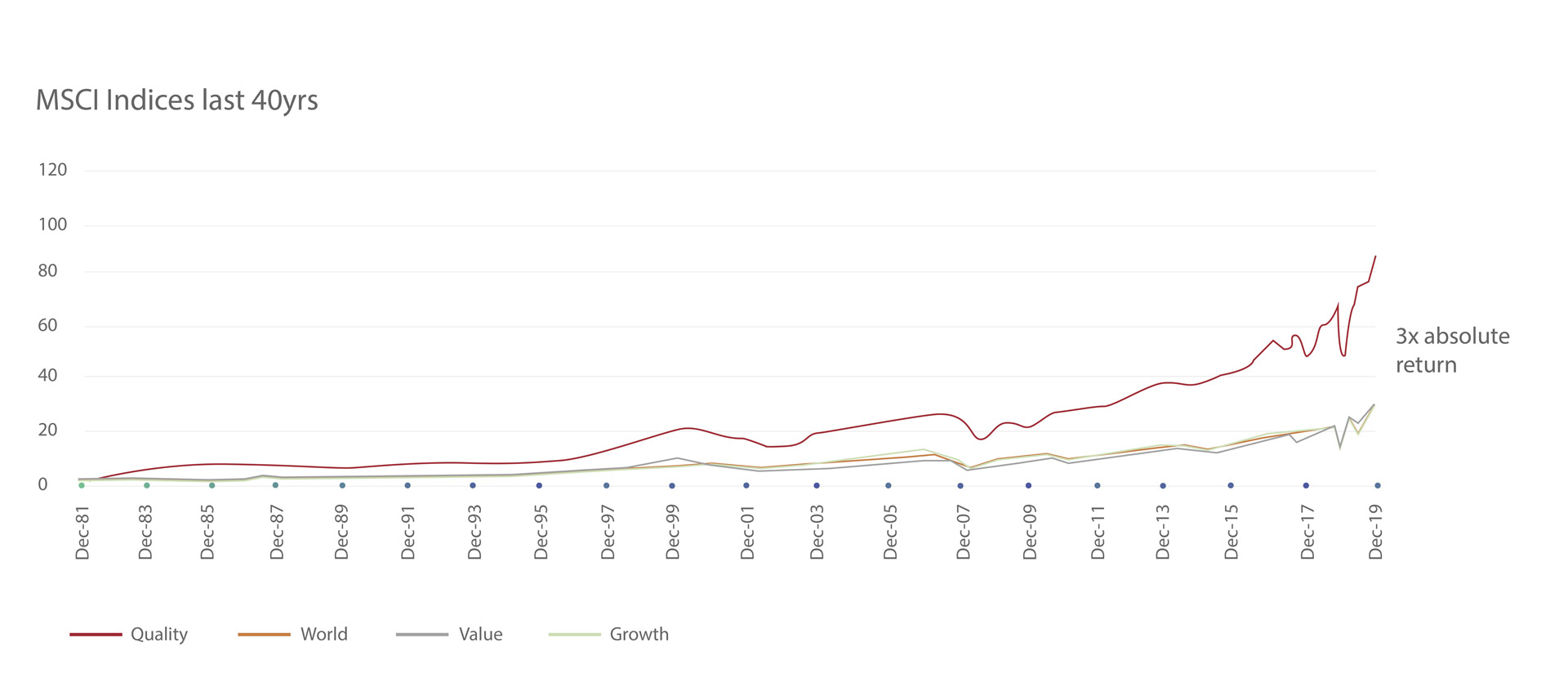
Historical data, theory and experience confirm this.
Empirically, the MSCI World Quality Index (a crude way of identifying quality) has delivered almost 3x more absolute return than the global index, the value index or the growth index over the last 40 years.

01


Sign up for the newsletter
Sign up if you want to know more about Nartex's investment philosophy.